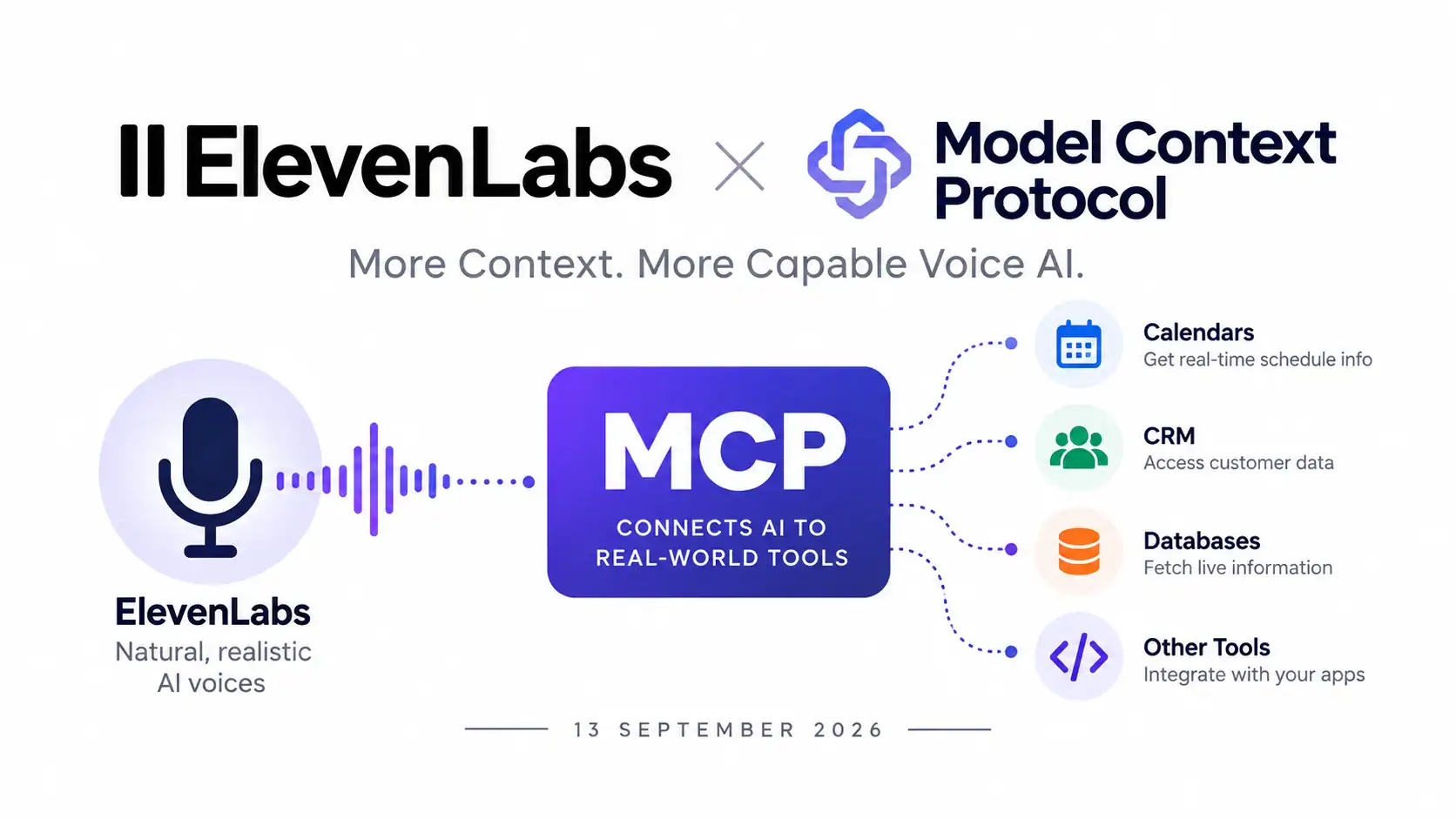
The ElevenLabs MCP Integration is opening a new path for developers who want to build more intelligent, context-aware voice applications. On September 11, 2026, ElevenLabs published a detailed explanation of how it is using the Model Context Protocol (MCP) to connect AI agents with external data sources and tools.
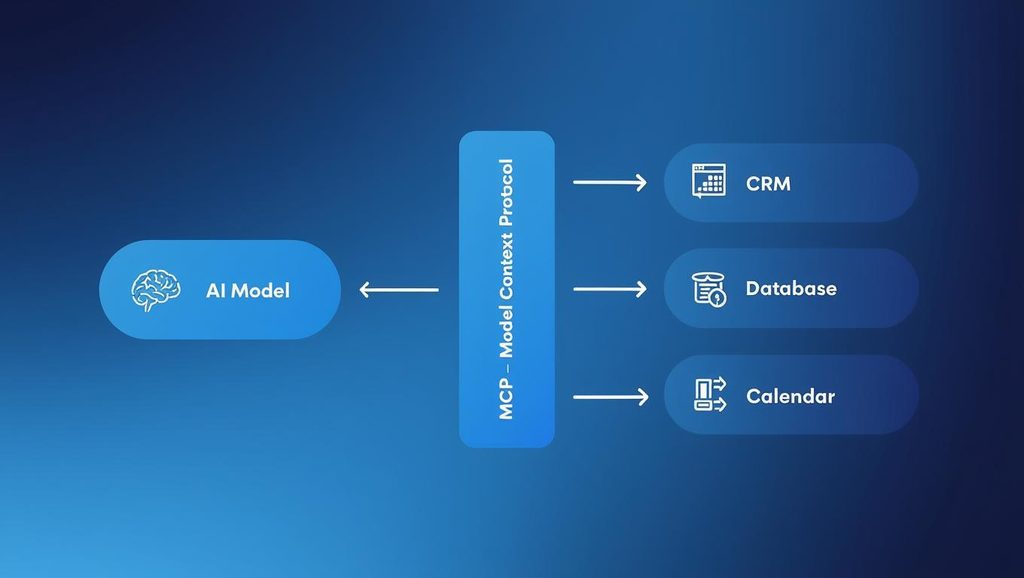
MCP is an open standard originally developed by Anthropic to give AI systems a consistent way to communicate with external applications, databases and services. ElevenLabs explains that MCP can help solve the so-called MxN problem, where every AI model may otherwise require separate point-to-point integrations with every external tool.
For voice creators, developers and businesses, the ElevenLabs MCP Integration could be particularly important because a conversational AI agent can obtain current information from external systems before responding to a user.
Instead of simply generating speech based on its existing context, a voice agent can potentially retrieve relevant information from systems such as a CRM, calendar or other connected service and then respond using natural-sounding speech.
What Is the ElevenLabs MCP Integration?
The ElevenLabs MCP Integration combines ElevenLabs’ voice-agent technology with the Model Context Protocol.
MCP provides a standardized communication layer between AI applications and external systems. Rather than developers creating a completely custom integration for every model and service, an MCP server can expose available tools and resources in a standardized format.
ElevenLabs says its platform can operate as both an MCP server and an MCP client. This distinction is important.
As an MCP server, ElevenLabs provides access to tools for managing ElevenLabs agents through an MCP-compatible AI assistant. Its hosted MCP server can be connected through OAuth, allowing assistants such as Claude and other supported hosts to interact with ElevenLabs agent-management capabilities using natural-language instructions.
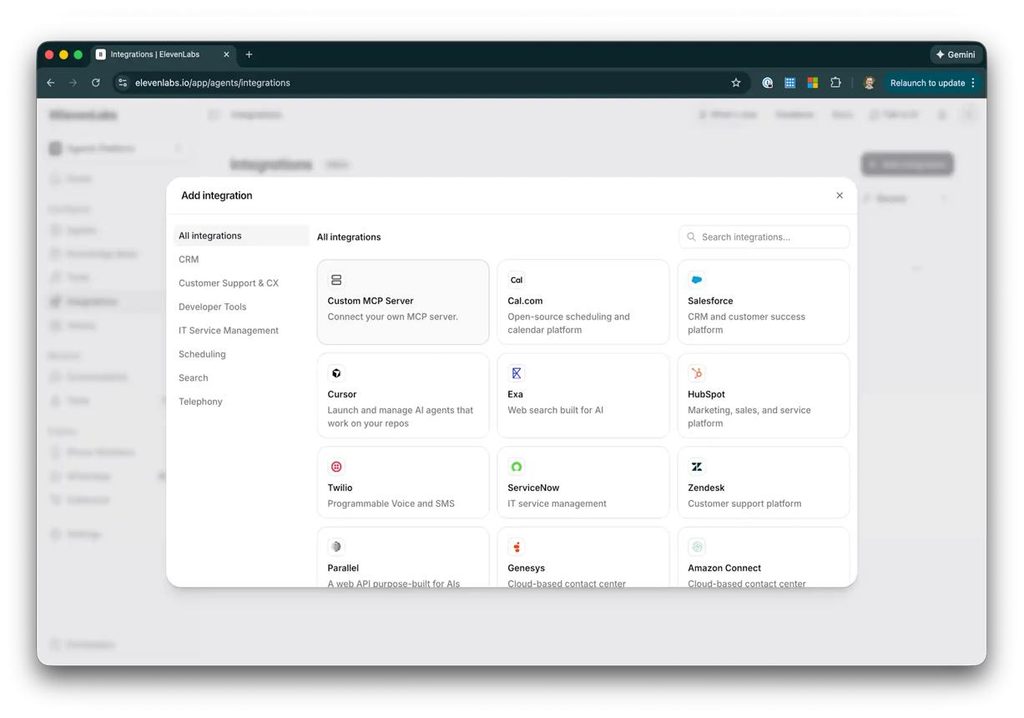
As an MCP client, ElevenLabs agents can connect to external MCP servers. ElevenLabs gives the example of connecting an agent to an external service such as Zapier MCP, which can provide access to many other tools and services.
This two-way architecture makes the ElevenLabs MCP Integration more flexible than a simple voice-generation API.
How Does MCP Solve the MxN Problem?
The MxN problem is one of the major engineering challenges associated with increasingly complex AI agents.
Imagine that a company has 10 AI agents and needs each one to connect to 20 external tools. With traditional point-to-point integrations, developers could end up maintaining 200 individual connections.
MCP changes the architecture.
Instead of maintaining an individual connection between every AI agent and every tool, MCP standardizes communication so systems can work with approximately M + N connections rather than M × N. ElevenLabs describes MCP as a universal communication layer for these systems.
For developers, this can make expanding an AI application’s capabilities considerably easier.
Why the ElevenLabs MCP Integration Matters for Voice AI
Traditional voice assistants often operate with limited information. They may understand what a customer says and generate an appropriate response, but accessing live business information can require additional backend programming.
The ElevenLabs MCP Integration can change this architecture by allowing voice agents to communicate with connected external systems.
For example, imagine a customer calls an AI-powered support assistant and asks:
“What’s the status of my latest order?”
The voice agent could potentially query an external customer-management or business system through an MCP connection, retrieve the relevant information and then speak the answer.
The same concept can apply to calendars, databases, internal knowledge sources and other tools.
ElevenLabs specifically describes a customer-service scenario where an ElevenLabs agent connects to an external MCP server such as Zapier MCP and retrieves customer information from Salesforce. The returned information can then be spoken to the customer by the ElevenLabs agent.
How the ElevenLabs MCP Integration Helps Creators
The technology isn’t only useful for enterprise developers.
YouTube and Content Creators
Creators can build voice-based applications that use live information instead of relying entirely on static prompts.
For example, an AI news assistant could potentially retrieve current information from approved sources and then generate a spoken briefing.
Voice-Over Developers
Developers building advanced voice-over applications can combine natural-sounding ElevenLabs speech with external application data.
This could make it possible to create personalized audio experiences where the content changes based on current information.
Customer-Service Applications
Businesses can build voice agents that retrieve customer-specific information before answering questions.
This could make conversational AI more useful than traditional scripted voice bots.
Real-Time Assistants
An assistant connected to calendars, databases or business systems can potentially perform more useful tasks during a conversation.
Instead of saying, “I don’t have access to that information,” an appropriately configured agent can query an available external resource.
ElevenLabs Subscription Plans
The ElevenLabs MCP Integration works within the broader ElevenLabs ecosystem, so developers and creators should understand the current subscription structure.
ElevenLabs currently lists the following plans:
| Plan | Monthly price | Credits/month | Best for |
|---|---|---|---|
| Free | $0 | 10,000 | Testing ElevenLabs |
| Starter | $6 | 30,000 | Individual creators |
| Creator | $22 | 121,000 | Serious content creators |
| Pro | $99 | 600,000 | Professional developers and creators |
| Scale | $299 | 1.8 million | Teams |
| Business | $990 | 6 million | Larger organizations |
| Enterprise | Custom | Custom | Enterprise deployments |
ElevenLabs says credits are shared across its products. The Starter plan includes a commercial license and instant voice cloning, while Creator adds professional voice cloning. Pro increases the allocation to 600,000 credits and includes higher-quality audio options through the API. Scale and Business are designed for teams and organizations.
Prices exclude applicable taxes, levies and duties. ElevenLabs also offers a startup grants program that can provide eligible startups with 12 months of access and up to 33 million characters for building and testing conversational AI agents.
Developers should check the official ElevenLabs pricing page before subscribing because plans, credits and promotional offers can change.
Step-by-Step: How to Use ElevenLabs with MCP
The ElevenLabs MCP Integration can be approached in two main ways: using ElevenLabs as an MCP server or connecting an ElevenLabs agent to an external MCP server.
Step 1: Create an ElevenLabs Account
Start by creating an ElevenLabs account and accessing the ElevenLabs workspace.
A free account can be useful for experimenting, while paid plans provide additional credits and creator/developer capabilities.
Step 2: Create or Select an ElevenLabs Agent
For a voice application, create an ElevenLabs conversational agent and configure its voice, instructions and other relevant settings.
Think of the agent as the conversational layer that interacts with the user.
Step 3: Identify the External Data or Tool
Decide what information your agent needs.
Examples include:
- Customer information
- CRM records
- Calendar availability
- Order information
- Internal databases
- Business tools
- External knowledge sources
Step 4: Choose an MCP Server
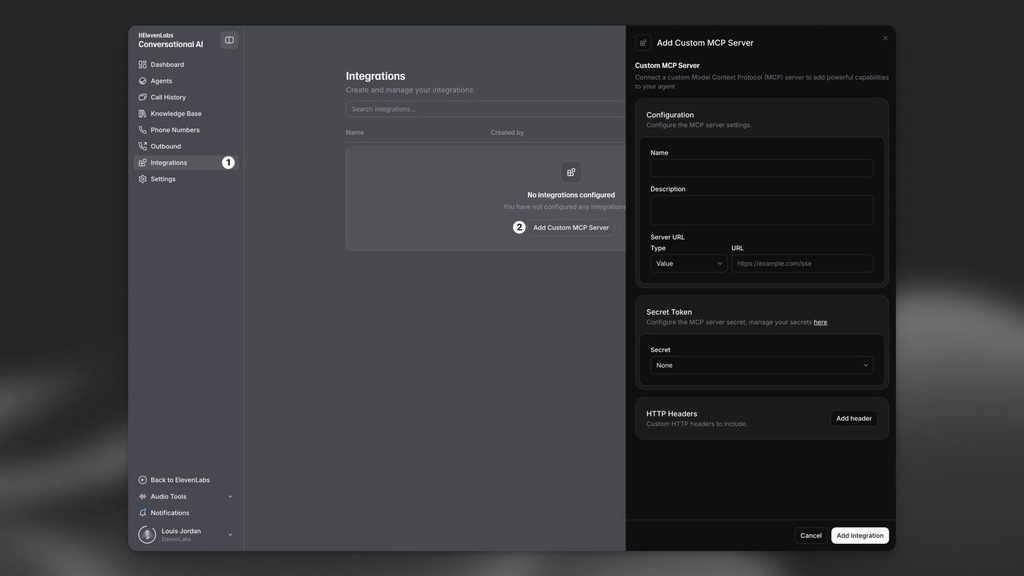
If the required service is available through an MCP server, configure the connection between your ElevenLabs agent and that server.
ElevenLabs’ documentation specifically discusses connecting agents to external MCP servers and gives Zapier MCP as an example.
Step 5: Authenticate the Connection
Use the authentication method required by the MCP server.
For ElevenLabs’ hosted MCP server, the company describes an OAuth-based secure connection that can be established from compatible AI hosts.
Step 6: Allow the Agent to Access the Required Tools
Configure which tools or resources the agent is permitted to use.
This is an important security step. An AI agent should only have access to the systems and actions it actually needs.
Step 7: Test With Natural-Language Requests
Now test the workflow with realistic requests.
For example:
“Check the customer’s account and tell me the status of their latest order.”
The agent can determine whether it needs external information and, where appropriately configured, use the connected MCP tool.
Step 8: Let the Agent Respond With Voice
After retrieving the required information, the ElevenLabs agent can generate its spoken response.
This is where the ElevenLabs MCP Integration becomes particularly interesting: external data retrieval and conversational voice generation can become part of the same workflow.
ElevenLabs as an MCP Server
One of the most interesting aspects of the ElevenLabs MCP Integration is that ElevenLabs isn’t only consuming MCP connections.
Its hosted MCP server can allow compatible AI assistants to manage ElevenLabs agents using natural-language commands.
For example, ElevenLabs demonstrates prompts for creating a customer-service agent, duplicating an existing agent and changing its language, and comparing conversation costs between models.
This means developers could potentially use an AI assistant as a natural-language control layer for their ElevenLabs voice infrastructure.
ElevenLabs as an MCP Client
The other side of the ElevenLabs MCP Integration is equally important.
ElevenLabs agents can connect to external MCP servers and use the tools they expose.
This means a voice agent doesn’t have to operate as an isolated system. It can become part of a larger AI workflow involving business applications and external services.
For example:
Customer → Voice Agent → MCP Server → CRM → Customer Data → Voice Agent → Spoken Response
This architecture could be especially valuable for customer service, sales, appointment scheduling and personalized assistants.
Security and Developer Considerations
MCP makes integrations easier, but developers still need to think carefully about security.
Voice agents should not automatically receive unrestricted access to business systems. Developers should control authentication, permissions, available tools and the data that can be accessed.
For sensitive applications, access should be limited to the minimum resources necessary for the agent’s task.
It is also important to remember that MCP provides a communication standard; it does not automatically make every external system secure. The security of the complete application depends on how the MCP server, connected service, authentication and agent permissions are configured.
The Future of Voice Agents
The ElevenLabs MCP Integration points toward a broader shift in conversational AI.
Voice agents are moving beyond simple question-and-answer systems. By connecting speech models to external tools and real-time information, developers can create assistants that can understand a request, retrieve information, perform actions and then respond naturally.
MCP could become an important part of this transition because it provides a standardized way for AI applications to discover and use external capabilities.
For creators, this means future voice applications could become significantly more dynamic. For developers, standardized integrations could reduce the amount of custom infrastructure required to connect AI systems to business software.
Final Takeaway
The ElevenLabs MCP Integration is more than another developer integration. It demonstrates how voice AI can become connected to the broader ecosystem of AI agents, databases and business applications.
By supporting both MCP server and client roles, ElevenLabs gives developers multiple ways to integrate voice agents with external systems.
For creators, the technology could lead to more personalized and context-aware voice applications. For developers, it offers a standardized approach to connecting conversational AI with real-time data and tools.
As AI voice agents become more capable, the combination of natural conversation + real-time context + external tools could become one of the most important building blocks for the next generation of voice applications.
Official Source: ElevenLabs — What is the Model Context Protocol and why it matters
Subscription Details: ElevenLabs Pricing