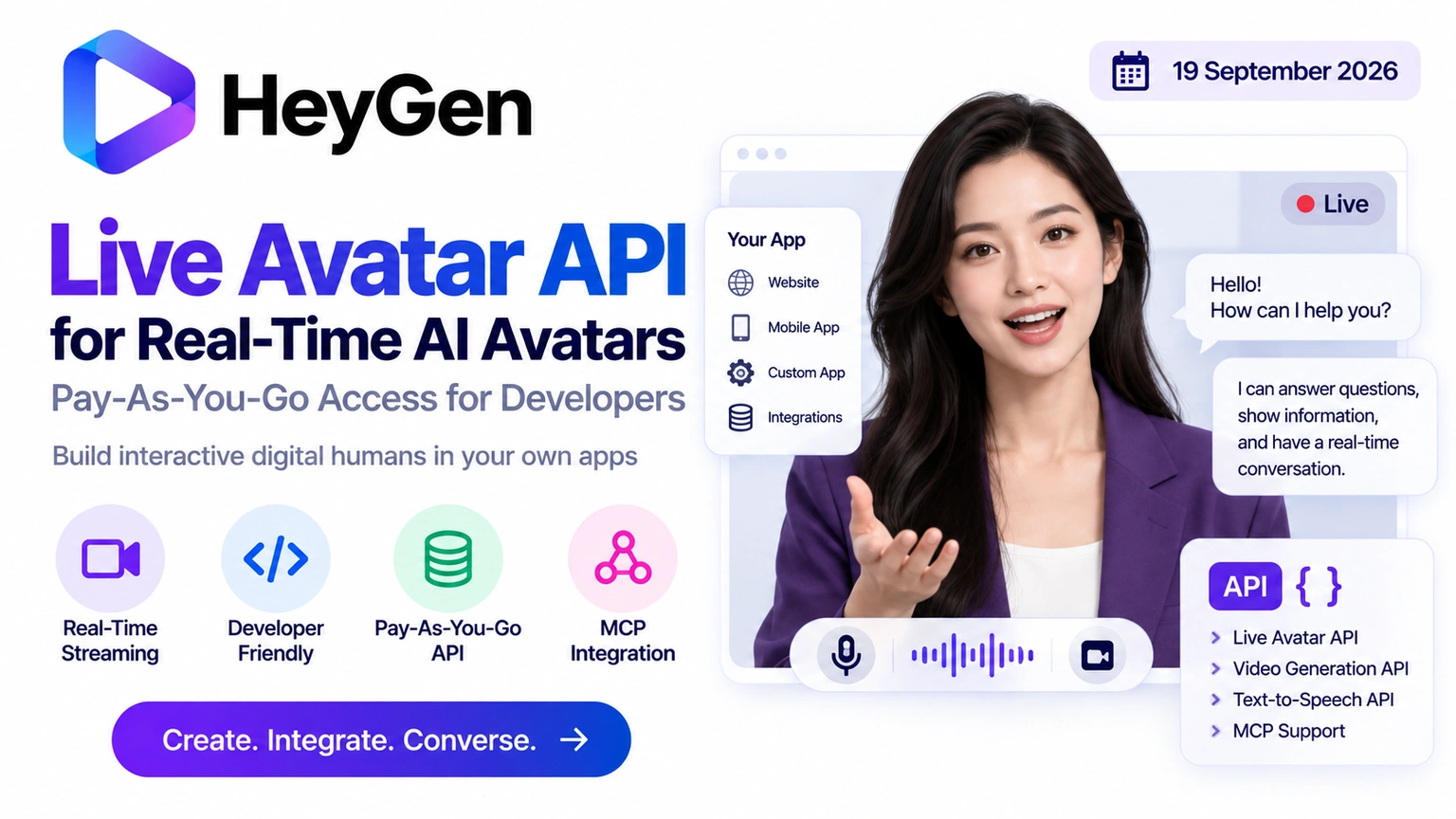
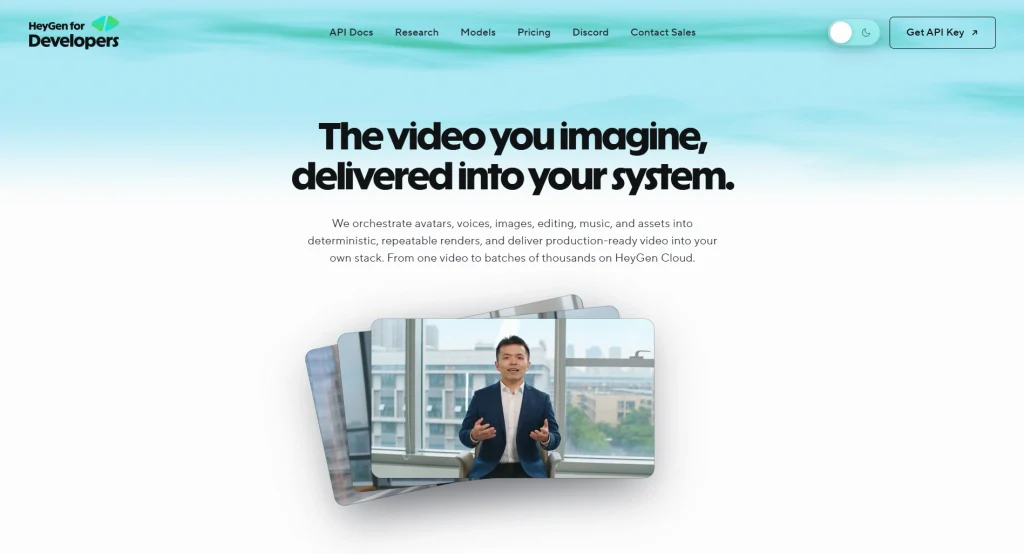
HeyGen is expanding beyond traditional AI video generation with a growing developer ecosystem built around real-time avatars, APIs and agentic workflows. One of the most important developments is the HeyGen Live Avatar API, which allows developers to add lifelike, streaming digital humans to websites, applications and custom AI experiences.
Alongside the HeyGen Live Avatar API, HeyGen has also moved its API toward a Pay-As-You-Go model, allowing developers to purchase API credits without first subscribing to a standard Creator, Pro or Business plan. HeyGen also supports integrations through Model Context Protocol (MCP), Skills and direct APIs.
For creators and developers, the combination could make interactive AI video considerably easier to experiment with and integrate into existing products.
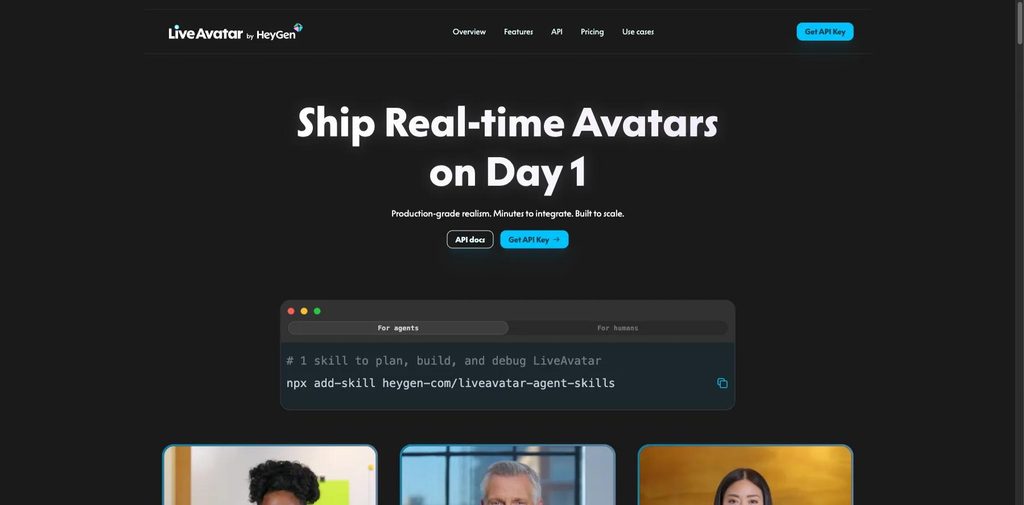
What Is the HeyGen Live Avatar API?
The HeyGen Live Avatar API is designed for real-time avatar experiences rather than conventional pre-rendered videos.
With traditional AI avatar generation, a creator writes a script, generates a video and then publishes the finished file. The HeyGen Live Avatar API changes that workflow by allowing an avatar to stream in real time and respond to user input during an active conversation.
HeyGen describes LiveAvatar as a platform for creating real-time conversational AI experiences with lifelike digital avatars. The avatar can generate synchronized, lip-synced video while responding to a conversation.
Depending on the implementation, developers can connect the avatar to an AI model and build experiences where users communicate with the digital human almost like they would with a live presenter.
This opens the door to applications such as:
- AI customer-support representatives
- Interactive tutors
- Virtual sales assistants
- Digital hosts
- Product demonstrations
- Training assistants
- Interactive characters
- Website-based AI agents
Why the HeyGen Live Avatar API Matters
The major difference is interactivity.
A normal AI video answers a question that was written into a script. A live avatar can participate in an ongoing conversation.
For example, imagine an online education website with an AI tutor. Instead of watching a pre-recorded explanation, a student could ask a question and receive a spoken answer from a digital teacher.
Similarly, an ecommerce company could use a digital sales assistant that answers product questions, while a customer-service application could connect the avatar to an AI system capable of retrieving information from a company’s knowledge base.
HeyGen’s documentation describes both FULL and LITE integration approaches. FULL mode can manage the conversational pipeline, while LITE mode allows developers to provide their own AI infrastructure and use LiveAvatar primarily as the real-time video layer.
That flexibility is particularly relevant to developers who already have their own LLM, speech recognition or text-to-speech infrastructure.
HeyGen Pay-As-You-Go API Removes a Major Barrier
Another significant change is HeyGen’s Pay-As-You-Go API model.
Previously, developers could face a subscription commitment before extensively testing API-based workflows. HeyGen’s current API pricing page says developers can start with $5, with no monthly commitment required. API credits are purchased separately from the standard HeyGen web subscriptions.
HeyGen’s API currently supports capabilities including:
- Video Agent API
- Text-to-Speech API
- Avatar III and Avatar IV video generation
- Video Translation API
- Photo Avatar creation
- Template-based video generation
- Avatar and voice libraries
- MCP Server access
- HeyGen Skills integration
This model can be particularly useful for independent developers, startups and creators who want to test an idea before committing to larger recurring expenses.
HeyGen’s Help Center also says Pay-As-You-Go API credits are standalone from regular HeyGen subscriptions, and current Pay-As-You-Go credits expire after 12 months.
HeyGen and Model Context Protocol (MCP)
The HeyGen Live Avatar API is only part of the developer expansion.
HeyGen also supports Model Context Protocol (MCP), which allows compatible AI assistants and applications to interact with HeyGen capabilities through a standardized connection.
According to HeyGen’s API documentation, MCP uses OAuth authentication rather than requiring developers to manually provide an API key. HeyGen also distinguishes MCP billing from direct API and Skills usage: MCP usage is deducted from the user’s web-plan premium credits, while direct API and Skills usage draw from the API dashboard balance.
This creates interesting possibilities for AI agents.
For example, an AI assistant could potentially receive a request such as:
Create a short product video featuring our digital presenter.
The AI workflow could use HeyGen tools to generate the required video rather than forcing the user to manually switch between multiple applications.
HeyGen has already highlighted MCP integrations across developer tools and AI platforms in its 2026 product updates.
How the HeyGen Live Avatar API Can Help Creators
The HeyGen Live Avatar API is especially interesting for creators who want to turn content into interactive experiences.
1. Build Interactive Educational Content
Creators can develop AI tutors that explain concepts, answer questions and respond to students dynamically.
2. Create Virtual Presenters
A YouTube or educational platform could potentially use a digital presenter to introduce content and respond to predefined or AI-generated questions.
3. Develop Customer-Service Agents
Businesses can integrate a LiveAvatar into their website and connect it to an AI knowledge system.
4. Build Interactive Marketing Experiences
Instead of a static promotional video, marketers can create an avatar capable of answering questions about a product or service.
5. Create Gaming and Entertainment Characters
Developers can experiment with conversational digital characters that respond to players in real time.
6. Automate Video Production
The broader HeyGen API ecosystem can also automate conventional avatar videos, translations and template-based video generation.
HeyGen Subscription Plans
It is important to distinguish HeyGen’s regular creator subscriptions, API Pay-As-You-Go, and LiveAvatar plans.
Regular HeyGen Plans
HeyGen currently lists these major web plans:
| Plan | Price | Key highlights |
|---|---|---|
| Free | $0/month | 3 videos/month, up to 1 minute, Avatar IV access |
| Creator | $29/month | 600 credits, 1080p, voice cloning, 30-minute videos |
| Pro | $49/month | 1,000 credits, 4K export, advanced AI models |
| Business | $149/month | 1,500 credits, 4K, team features and integrations |
| Enterprise | Custom | Advanced security, support and scalability |
Annual billing can reduce the effective price of some plans.
HeyGen API Pay-As-You-Go
For developers, the API can be purchased separately from these subscriptions.
The current API pricing page says developers can start with $5 and pay according to API usage. Enterprise customers can receive customized scalability, dedicated developer support, additional API capabilities and discounted rates.
LiveAvatar Plans
LiveAvatar has its own pricing structure. HeyGen currently lists:
- Free: limited testing
- Starter: $19/month
- Essential: $99/month
- Business: $475/month
- Enterprise: custom pricing
LiveAvatar credits are separate from standard HeyGen API credits. Depending on the integration mode, one credit can provide different amounts of streaming time.
Because pricing, credits and limits can change, developers should check the official pricing pages before launching a production application.
Step-by-Step: How to Build With HeyGen Live Avatar API
Here is a simplified workflow for creators and developers.
Step 1: Create a HeyGen Account
Visit HeyGen and create an account.
For initial experimentation, you can begin with the available free options.
Step 2: Choose Your Avatar
Select an available avatar or configure an eligible custom avatar.
For production applications, make sure you have the necessary rights and consent for any custom likeness or voice you use.
Step 3: Choose Your LiveAvatar Integration
Decide whether you want HeyGen to manage more of the conversational stack through FULL mode or whether your application will provide its own AI infrastructure using LITE mode.
Step 4: Connect Your AI Model
Your application can process the user’s message through your chosen AI system.
For example:
User → Speech Recognition → LLM → Response → LiveAvatar
The resulting response can then be delivered through the streaming avatar.
Step 5: Start a Live Session
Your application initiates a LiveAvatar session and connects the user’s interface to the streaming avatar.
The avatar can then speak and respond during the conversation.
Step 6: Add Real-Time Data
This is where the workflow becomes much more powerful.
Connect your AI application to appropriate data sources, APIs, databases or business systems so that the AI can provide context-aware responses.
Step 7: Add MCP or Other Integrations
If your workflow benefits from AI-agent integrations, HeyGen provides MCP access as one of its integration paths. MCP uses OAuth, while direct API and Skills integrations use an API key.
Step 8: Test and Deploy
Start with a small prototype.
Test:
- Response latency
- Avatar synchronization
- Conversation quality
- API costs
- Session duration
- Error handling
- Privacy and security
Once the experience works reliably, deploy it to your website or application.
What This Means for the Future of AI Video
The HeyGen Live Avatar API represents a broader transition in AI video—from generating videos to creating interactive digital humans.
Traditional AI video is primarily a content-generation workflow. Real-time avatars introduce another layer: interaction.
At the same time, Pay-As-You-Go API access gives smaller developers a way to experiment without necessarily committing to a large recurring API subscription. MCP and Skills further connect HeyGen’s capabilities with modern AI-agent workflows.
For creators, this could mean that the digital presenter is no longer limited to a prerecorded YouTube video. The same concept could eventually appear inside websites, applications, educational platforms, customer-support systems and interactive experiences.
Final Takeaway
The HeyGen Live Avatar API is an important step toward more interactive AI-powered video experiences. Instead of simply generating an avatar video from a script, developers can build real-time digital humans that participate in conversations.
Combined with Pay-As-You-Go API access, MCP, Skills and HeyGen’s broader video-generation ecosystem, the platform now offers several ways for creators and developers to integrate AI video into their own products.
For independent creators, the biggest opportunity is the ability to start small: prototype an interactive avatar, connect it to an AI model, test the experience and scale the workflow as demand grows.
Frequently Asked Questions
It’s an API for real-time avatar experiences rather than pre-rendered videos — an avatar streams live and responds to user input during an active conversation, generating synchronized, lip-synced video on the fly.
A normal AI video answers a question that was written into a script beforehand. A live avatar participates in an ongoing conversation, responding dynamically rather than playing back a fixed recording.
FULL mode lets HeyGen manage the conversational pipeline. LITE mode lets developers supply their own AI infrastructure (LLM, speech recognition, TTS) and use LiveAvatar mainly as the real-time video layer.
Developers can start with $5 in API credits with no monthly commitment, purchased separately from HeyGen’s standard web subscriptions. This lowers the barrier for testing API workflows before committing to a subscription.
Video Agent API, Text-to-Speech API, Avatar III and Avatar IV video generation, Video Translation API, Photo Avatar creation, template-based video generation, avatar and voice libraries, MCP Server access, and HeyGen Skills integration.
Yes. HeyGen’s Help Center states Pay-As-You-Go API credits are standalone from regular subscriptions and expire after 12 months.
MCP lets compatible AI assistants and applications interact with HeyGen through a standardized connection, using OAuth authentication instead of a manually provided API key. MCP usage draws from the user’s web-plan premium credits, while direct API and Skills usage draw from the API dashboard balance.
Free ($0/month, 3 videos), Creator ($29/month, 600 credits, 1080p), Pro ($49/month, 1,000 credits, 4K), Business ($149/month, 1,500 credits, team features) and a custom Enterprise plan.
Free (limited testing), Starter ($19/month), Essential ($99/month), Business ($475/month) and custom Enterprise pricing. LiveAvatar credits are separate from standard API credits.
Yes, using LITE mode. A typical flow is user → speech recognition → LLM → response → LiveAvatar, where your own AI system handles reasoning and HeyGen handles the streaming avatar.
Official sources:
HeyGen API Pricing
HeyGen LiveAvatar Guide
HeyGen Pricing
HeyGen Product Updates